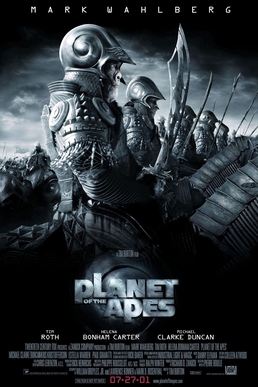
Planet of the Apes 2001: Unraveling the Mystery of Its Reverse Time Travel Ending
Few science fiction films have left audiences as bewildered and enthralled as Tim Burton's 2001 reimagining of Planet of the Apes. From its visually striking ape society to its ambiguous narrative, the movie culminates in a shocking twist that continues to fuel intense debate decades later. At the heart of this enduring enigma is a peculiar form of time travel, which fundamentally redefines everything viewers thought they understood. For those seeking clarity on the notorious conclusion, this article aims to provide a comprehensive Planet of the Apes 2001 Ending Explained, focusing on the fascinating concept of "reverse order" time travel and its profound implications.
From Oberon to an Ape-Dominated World: Leo Davidson's Odyssey
The journey begins aboard the space station Oberon in the year 2029, where astronaut Captain Leo Davidson (Mark Wahlberg) works alongside trained chimpanzees used for piloting experimental spacecraft. During a mission, Leo's favorite chimp, Pericles, is lost in a bizarre electromagnetic storm in deep space. Driven by a fierce loyalty, Leo disobeys orders and pilots a small pod directly into the anomaly, only to crash-land on a desolate planet. Here, he discovers a world where intelligent, speaking apes dominate, while humans are enslaved, hunted, and treated as mere beasts of burden.
Leo quickly learns that this oppressive ape society has a peculiar origin. Centuries prior, the Oberon itself, along with its full complement of human and ape crew, also passed through the very same electromagnetic storm, crashing on this planet long before Leo's arrival. It was the apes from the Oberon who, free from human oversight, evolved and established the advanced, yet brutal, civilization Leo now finds himself trapped within. After a series of thrilling adventures, forming alliances with sympathetic apes like Ari (Helena Bonham Carter), and engaging in a climactic battle against the tyrannical General Thade (Tim Roth), Leo seizes an opportunity for escape. He finds the wreckage of the Oberon and, utilizing one of its intact pods, re-enters the swirling electromagnetic storm, hoping to return to his home planet, Earth.
The Paradox of the Electromagnetic Storm: Decoding Reverse Time Travel
The key to understanding the bewildering conclusion lies in the unique nature of the electromagnetic storm Leo encounters – a phenomenon that facilitates what can best be described as "reverse order" time travel. Unlike conventional time displacement seen in many sci-fi narratives, where objects simply arrive at a different point in time, this storm scrambles the temporal sequence of passage. What enters first may leave last, and vice versa, creating a causal loop that defies linear progression.
Let's break down this crucial concept:
- Pericles' Initial Departure: Pericles, Leo's chimp, enters the storm first. Yet, he arrives on the ape planet *after* Leo and the Oberon's original crew have already established the ape civilization. This means he exits the storm much later in the destination's timeline, despite entering it first.
- Leo's Second Departure: Leo follows Pericles into the storm. He arrives on the ape planet *after* the Oberon and its crew have crash-landed and centuries have passed, allowing ape civilization to flourish. This means Leo exited the storm *before* Pericles, even though he entered *after* him.
- The Oberon's Unseen Journey: The Oberon itself, with its original complement of humans and chimps, is implied to have entered the storm *after* Leo's initial departure from his original timeline. However, it arrived on the ape planet *much earlier* than Leo, becoming the foundation of the ape society. This establishes the critical "reverse order" where the Oberon, entering later (from Leo's perspective in time), arrives earlier in the destination's history.
This "reverse order" mechanism suggests that the storm doesn't just transport through time and space but can invert the arrival sequence relative to the entry sequence, creating a complex temporal knot. For audiences accustomed to straightforward time travel logic, this unique approach provides no easy answers, forcing a deeper examination of causality and consequence.
A Dystopian Homecoming: Washington D.C.'s Simian Surprise
After successfully navigating the electromagnetic storm for a second time, Leo Davidson's pod crash-lands back on what appears to be his home planet. He lands in Washington, D.C., recognizing the familiar monuments and feeling an overwhelming sense of relief. However, this relief quickly turns to utter disbelief and horror as he approaches the iconic Lincoln Memorial. Instead of the familiar statue of Abraham Lincoln, Leo is confronted by a massive, imposing monument dedicated to General Thade – the very ape villain he had just fought to escape. The horror deepens as he is immediately surrounded by police, media, and other authorities, all of whom are intelligent, evolved apes.
This utterly bewildering image concludes the film, leaving a lingering question: Has Leo truly returned to his own Earth, or has something fundamentally changed? The appearance of Thade's monument and the ape-dominated D.C. indicate a profound alteration of history. This twist, a topic of endless discussion, is expertly explored in The Planet of the Apes 2001 Ending: Thade's Monument Explained, detailing how this single image encapsulates the film's core mystery.
Theories Behind the Ape-Dominated Earth
Given the film's ambiguous nature and unique time travel rules, several compelling theories attempt to make sense of Leo's return:
- The Paradoxical Loop: This is arguably the most prevalent and consistent theory with the film's implied "reverse order" time travel. When the Oberon (with its original apes) entered the storm, it arrived on Earth *in the past* relative to Leo's departure time, setting off a chain of events that led to apes evolving and dominating the planet much earlier than humanity. Leo's return merely brings him to this *already altered* Earth, which has been ape-ruled for centuries. In this scenario, Leo's actions (and the Oberon's initial journey) inadvertently created the very future he sought to escape, essentially closing a predestined loop. His "original" Earth was always destined to become ape-dominated the moment the Oberon was sent through the storm.
- The Alternate Reality Shift: Another interpretation suggests the electromagnetic storm isn't just a time tunnel but a portal to different realities. Upon re-entering, Leo might not have returned to his original Earth's altered past, but rather to an entirely parallel Earth that had always been dominated by apes. The Thade monument, in this case, would simply be a feature of this new, distinct timeline. However, the film's emphasis on the "reverse order" of arrivals leans more towards a single, paradoxically altered timeline rather than a jump to an existing alternate one.
- Leo's Direct Influence: A less common theory posits that Leo's very act of re-entering and exiting the storm, combined with his knowledge and influence on the ape planet, somehow directly triggered the change on his home Earth. While he didn't explicitly "bring" apes back, his disruption of the timeline could have had ripple effects that restructured his original reality. This, however, still relies heavily on the Oberon's earlier arrival being the primary catalyst.
The brilliance of this ending lies in its refusal to offer a definitive answer, instead inviting viewers to grapple with the implications of causality, destiny, and the potential for a single event to reshape an entire civilization's history.
Enduring Legacy and Interpretations
The 2001 Planet of the Apes ending, with its bold embrace of a complex time travel paradox, remains a powerful talking point in science fiction cinema. It forces audiences to rethink the traditional hero's journey, where escaping a dystopian future only leads to its unexpected inception in the past. This ambiguity isn't a flaw; it's a feature that deepens the film's impact and ensures its longevity in discussions about film theory and temporal mechanics. It challenges viewers to consider the profound consequences of seemingly isolated events and the delicate balance of history. Such narrative choices encourage re-watches and detailed analysis, transforming a movie viewing into an active intellectual exercise.
In conclusion, the enigmatic conclusion of Tim Burton's Planet of the Apes (2001) is best understood through the lens of its unique "reverse order" time travel. This mechanism, where the sequence of entry into a temporal anomaly doesn't match the sequence of arrival, creates a paradoxical loop that ultimately transforms Leo Davidson's Earth into an ape-dominated planet. Whether a preordained destiny or a catastrophic ripple effect, the Planet of the Apes 2001 ending explained through this temporal inversion remains a captivating, thought-provoking finale that secures its place as one of cinema's most debated twists.