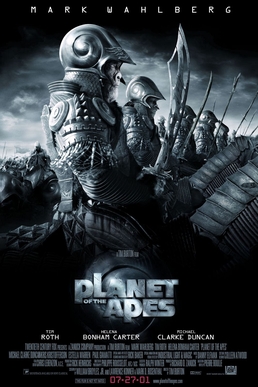
The Planet of the Apes 2001 Ending: Thade's Monument Explained
Tim Burton’s 2001 reimagining of Planet of the Apes is a film notorious not just for its ambitious visual style and stellar cast, but primarily for its utterly perplexing and hotly debated finale. Since its release, audiences have grappled with a shocking twist that upends everything astronaut Leo Davidson thought he knew, leaving viewers with more questions than answers. The sight of General Thade's monument replacing Abraham Lincoln's is perhaps the most iconic and confusing image, central to understanding the film's audacious conclusion. Here, we delve deep into the events leading to this moment and explore the leading theories that attempt to offer a definitive Planet Of The Apes 2001 Ending Explained, making sense of its baffling implications.
A Journey to an Ape-Dominated World
The film introduces us to American astronaut Leo Davidson (Mark Wahlberg), stationed on the space station Oberon. His work involves using genetically enhanced chimpanzees to pilot experimental spacecraft. During a routine mission, Leo’s beloved chimp, Pericles, disappears into a mysterious electromagnetic storm. Driven by loyalty, Leo bravely follows, only to crash-land on an alien planet where intelligent apes dominate, and humans are enslaved and hunted. This world, as he soon discovers, is populated by descendants of the Oberon's apes and humans who crash-landed centuries earlier, having also been swept into the same temporal-spatial anomaly.
Leo’s desperate fight for survival sees him ally with sympathetic ape scientists like Ari (Helena Bonham Carter) and eventually lead a human rebellion against the oppressive ape regime, spearheaded by the ruthless General Thade (Tim Roth). After a climactic battle and uncovering the truth about the apes' origins on this planet, Leo finds a way to escape. He locates the wreckage of the Oberon, repairs a small craft, and re-enters the very same electromagnetic storm that brought him to this bizarre world, hoping to return to his home planet and timeline.
The Bewildering Return: Thade's Monument and a Primate Washington D.C.
Leo's re-entry into the storm and subsequent landing initially brings a wave of relief. He crash-lands in what appears to be Washington D.D., recognizing familiar landmarks. The sight of the Capitol building and the Washington Monument fills him with hope that he has successfully returned to his own time and Earth. However, his relief is short-lived, replaced by profound horror and confusion as he approaches the iconic Lincoln Memorial. Instead of the revered sixteenth President, Leo finds an imposing, grand statue of General Thade. Adding to the chilling tableau, he is immediately surrounded by police, media, and other authorities – all of whom are intelligent, sentient apes.
This final, wordless image is the film's mic drop, leaving audiences stunned and bewildered. The central question instantly arises: Did Leo return to his own Earth, or has something fundamentally changed, warping his reality into a new ape-dominated nightmare? This dramatic reveal is the linchpin of the entire Planet of the Apes 2001 Ending: Unpacking the Controversial Twist.
Understanding the "Reverse Order" Time Travel
To unravel the mystery of Thade's monument, one must first grasp the film’s unique and unconventional take on time travel – specifically, its concept of "reverse order" time travel, a crucial element for a complete Planet Of The Apes 2001 Ending Explained. Unlike many science fiction narratives where cause and effect are linear, the electromagnetic storm in Planet of the Apes acts as a chaotic temporal gate, connecting different points in time through space without adherence to traditional chronological order.
The film subtly indicates this non-linear progression through a series of key events:
- Pericles, the Chimp: He enters the storm first but arrives on the ape planet *after* Leo.
- Leo Davidson: He goes through the storm second but lands on the ape planet *after* the Oberon and its crew.
- The Oberon Space Station: This is the last to enter the storm (after Leo), yet it lands on the ape planet *centuries earlier* than everyone else, carrying the very apes that would evolve and establish their society.
This "reverse order" arrival is pivotal. If the Oberon (carrying the genesis of ape intelligence) could arrive on an unknown planet centuries before its pilot, then the same principle could apply to Leo's return journey. This concept is further explored in Planet of the Apes 2001: Understanding Its Reverse Time Travel.
Theories Behind Thade's Reign on Earth
The existence of Thade's monument on what appears to be Earth's capital fuels several theories, each attempting to reconcile the impossible:
1. The Altered Timeline Theory (Most Prevalent)
This is the most widely accepted and compelling explanation. The electromagnetic storm didn't just send Leo back to *an* Earth, but fundamentally altered *his own* Earth's timeline. The critical component here is the Oberon itself. If the Oberon, or at least its intelligent apes, also somehow passed through the storm and arrived on Earth's past (perhaps even *before* Leo's departure or during a critical evolutionary period), they could have kickstarted ape evolution and dominance on Leo's home planet. General Thade, as a symbol of ape power and superiority, would then naturally become a revered historical figure, immortalized in monuments, mirroring human historical figures like Lincoln. In this scenario, Leo didn't return to a different Earth, but to a drastically changed version of his own, a future he inadvertently helped create or influence through his journey.
2. Parallel Universe/Dimensional Shift
Another theory suggests that Leo didn't return to his original Earth at all, but was instead shunted into a parallel universe or alternate dimension. In this reality, apes might have evolved intelligence independently, or a similar "Oberon-like" event occurred in that universe's past, leading to an ape-dominated society. While this avoids the complexities of rewriting Leo's own history, it sidesteps the direct cause-and-effect implications of the electromagnetic storm and offers a less direct connection to Leo's personal journey. However, the emotional impact remains the same for Leo – his home is gone.
3. The Planet Was Always Earth (A Deeper Time Warp)
A less popular but intriguing theory posits that the planet Leo initially landed on *was* Earth all along, just incredibly far into the future, after some cataclysm that reverted human civilization and led to ape dominance. Leo's "escape" through the storm didn't bring him back to his original time, but merely to a different point in *Earth's* altered future, one where ape civilization had advanced further and already built its monuments. This interpretation makes the initial journey less "off-world" and more of a profound temporal displacement on his own planet.
The Symbolism of Thade's Monument
Beyond the mechanics of time travel, Thade's monument itself is a powerful symbol. Abraham Lincoln is revered as a liberator, a figure who fought for equality and freedom. Thade, on the other hand, represents the exact opposite: an enslaver, a supremacist who vehemently believes in ape superiority and human subjugation. The replacement of Lincoln with Thade at a site of such national importance fundamentally inverts the values and history Leo understands. It signifies the complete and utter triumph of apekind and the reversal of the social hierarchy, a stark, visual punchline emphasizing the film's core themes of prejudice, power, and the fragility of societal order.
The Enduring Legacy of the Twist
The 2001 Planet of the Apes ending remains one of cinema's most polarizing and discussed finales. It generated immense debate, left many frustrated by its ambiguity, and arguably hampered the potential for direct sequels in this particular continuity. Yet, its enduring mystery is also its strength. By refusing to provide a neat resolution, the film forces audiences to grapple with profound questions about identity, reality, and the cyclical nature of power. It's a bold, unsettling conclusion that ensures the film, and especially Thade's monument, will be remembered long after the credits roll.
Conclusion
The Planet Of The Apes 2001 Ending Explained largely boils down to the chaotic nature of its unique time travel. The image of General Thade’s monument replacing Abraham Lincoln’s is a potent symbol of an altered reality, most likely brought about by the Oberon's apes arriving in Earth's past via the same electromagnetic storm. Leo Davidson’s journey concludes not with a triumphant return home, but with the terrifying realization that his home, or at least his understanding of it, has been irrevocably changed. It’s a twist that challenges perception, provokes thought, and ensures that the 2001 film leaves an indelible, if often bewildering, mark on science fiction cinema.